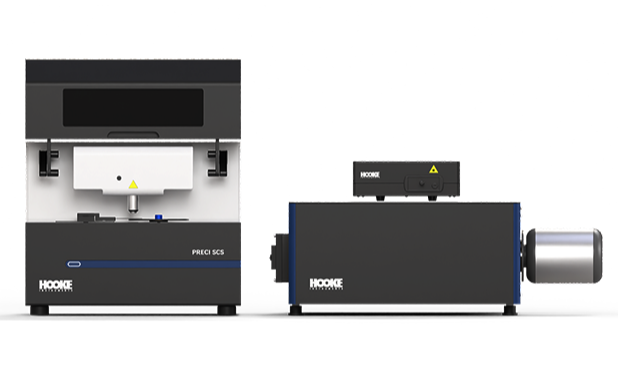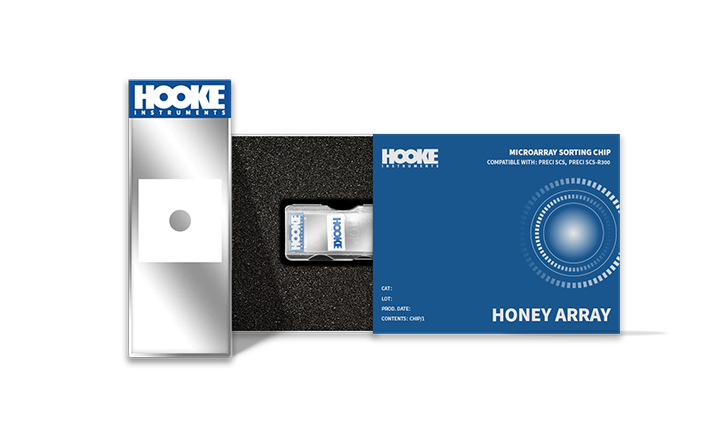


Nature Communications: PRECI SCS-R300 Enables Precision Single-Cell Culturomics Through Label-Free Morphology and Raman Spectra
-
Customer
-
Fudan University

-
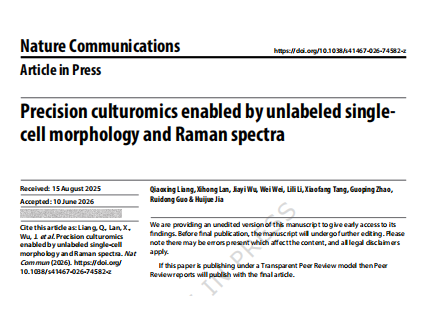
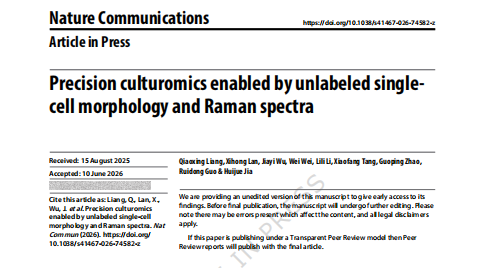
In 2026, researchers from Fudan University and collaborators published an Article in Press in Nature Communications entitled “Precision culturomics enabled by unlabeled single-cell morphology and Raman spectra.” The study developed a precision single-cell culturomics workflow that integrates label-free morphology, Raman spectroscopy, machine learning-based target identification, and Laser-Induced Forward Transfer (LIFT).
Using the PRECI SCS-R300 Raman Single-Cell Sorter from Hooke Instruments, the researchers demonstrated that individual bacterial cells could be identified, isolated, and cultured directly from complex microbiome samples before visible colonies were formed. This work provides a powerful route for targeted recovery of live bacteria from fecal and vaginal microbiome samples, supporting microbiome research, probiotic discovery, live biotherapeutic development, and antibiotic-response studies.
From Colony Picking to Precision Single-Cell Culturomics
Traditional culturomics relies heavily on plating and colony picking. While this approach has greatly expanded microbial isolate collections, it often favors abundant or fast-growing bacteria. Rare beneficial microbes, slow-growing commensals, or functionally important target taxa may therefore remain difficult to recover.
This study moves culturomics from the colony level to the single-cell level. Individual microbial cells were first characterized by microscopy and Raman spectroscopy, then classified by a machine learning framework, and finally isolated by LIFT for live culture.
This creates a “what-you-see-is-what-you-culture” workflow, allowing researchers to enrich desired microbes, exclude unwanted dominant taxa, and recover live single-cell-derived cultures from complex microbiome samples.
01. Research Background | Scientific Challenge
Defined microbial isolates are essential for functional microbiome research. However, conventional cultivation methods are often biased toward abundant and fast-growing bacteria. Colony-level selection also provides limited taxonomic precision and usually requires visible colony formation after prolonged incubation.
The key challenge is therefore clear: researchers need a method that can identify and recover target bacteria at the single-cell stage, without relying on fluorescent labels, long incubation, or prior colony formation.
02. Research Method | Experimental Workflow
The study established an integrated workflow:
Complex microbiome sample → single-cell morphology and Raman spectra acquisition → machine learning-based target identification → LIFT-based single-cell sorting → single-cell culture → genome sequencing and analysis
Morphological features such as cell length, width, area, aspect ratio, circularity, and eccentricity were extracted from microscopic images. Raman spectra provided label-free biochemical fingerprints of individual cells. A machine learning framework then integrated these features to predict whether a cell belonged to the target taxon.
Selected cells were transferred by the LIFT module of PRECI SCS-R300 into collectors and then cultured under appropriate anaerobic conditions.
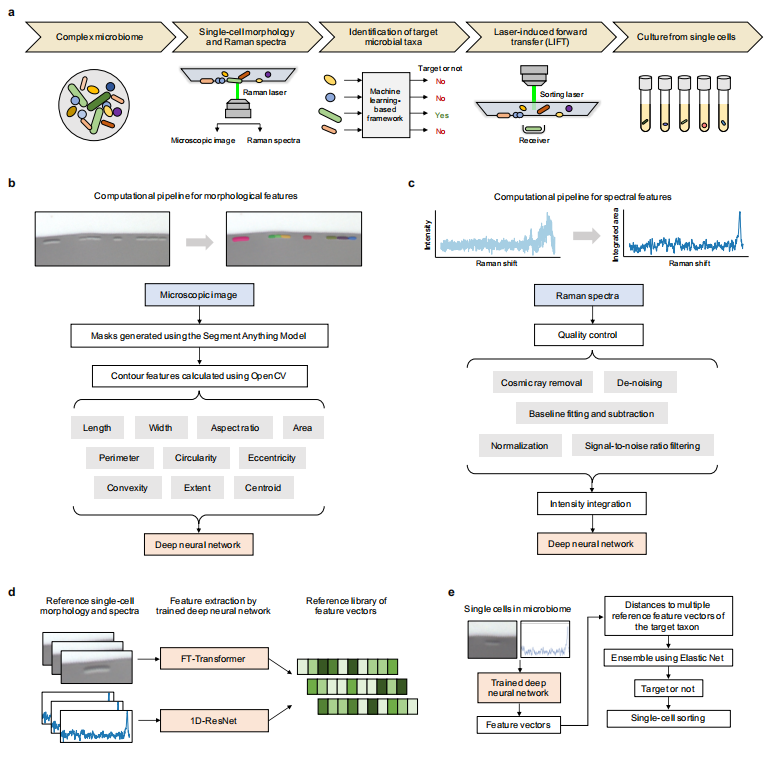
Figure 1: Precision Single-Cell Culturomics Workflow:
This workflow illustrates how complex microbiome samples are processed for precision single-cell culturomics. Individual bacterial cells are first characterized by microscopic morphology and Raman spectra, then identified by a machine learning-based framework, isolated by LIFT, and finally cultured as single-cell-derived live isolates.
03. Research Results | Key Findings
3.1 Label-free single-cell phenotyping provides information before culture
The study first showed that individual bacterial cells contain rich label-free phenotypic information before they form colonies. Microscopic morphology provided taxonomically informative features such as cell length, width, area, and aspect ratio. Raman spectra further captured biochemical fingerprints of individual cells, adding molecular-level information to visual morphology.
Using Bacillus licheniformis as a model, the researchers showed that Raman spectra could distinguish vegetative cells, citrate-treated cells, and spores. Raman-based analysis also enabled the detection of molecular differences such as DPA and Ca-DPA, highlighting the value of Raman spectroscopy for label-free biochemical characterization at the single-cell level.
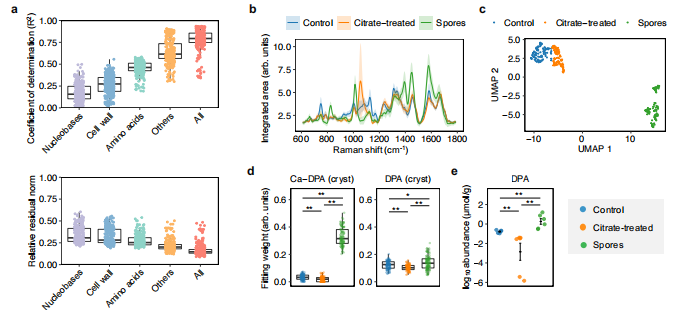
Figure 2: Label-Free Raman Phenotyping of Bacterial Cell States:
Single-cell Raman spectra distinguished different physiological states of Bacillus licheniformis, including vegetative cells, citrate-treated cells, and spores. Raman-based analysis further enabled detection of molecular differences such as DPA and Ca-DPA, demonstrating the value of Raman spectroscopy for label-free biochemical characterization before culture.
3.2 Machine learning translates single-cell phenotypes into target identification
To identify target bacteria before culture, the researchers developed a machine learning framework that integrates single-cell morphology and Raman spectral information. A Siamese neural network was used to extract feature vectors from individual cells, and these features were compared with a reference library to determine whether each cell belonged to a target taxon.
The integrated model using both morphology and Raman spectra achieved stronger taxonomic prediction performance than models based on either modality alone. This demonstrates that multimodal single-cell phenotyping can improve target-cell identification before LIFT-based sorting.
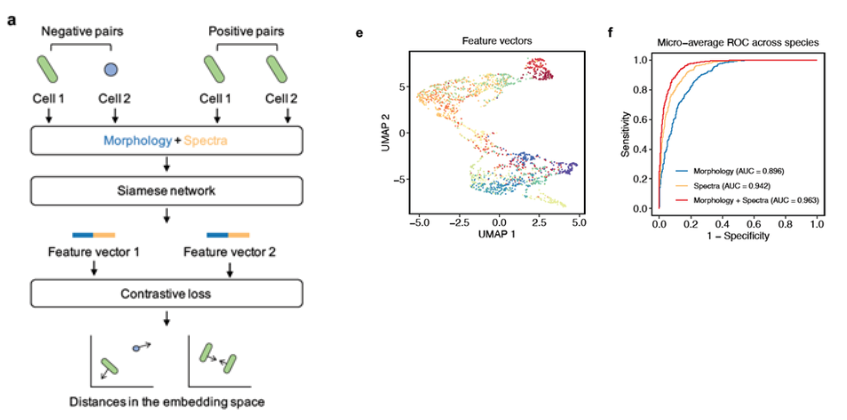
Figure 3: Machine Learning-Based Identification of Target Microbial Cells:
The machine learning framework integrated single-cell morphology and Raman spectral information to identify target taxa before sorting. Feature-vector analysis separated bacterial species more clearly than raw data, and the integrated morphology-plus-Raman model achieved stronger classification performance than either morphology or Raman spectra alone.
3.3 Precision culturomics enables targeted recovery from complex microbiomes
The most important application result is the selective recovery of target bacteria from complex microbiome samples. The workflow was applied to fecal and vaginal microbiome samples, enabling both negative selection against unwanted dominant bacteria and positive selection of beneficial or rare taxa.
In pre-cultured fecal samples, fast-growing E. coli dominated conventional recovery. By applying machine learning-guided negative selection, the researchers substantially reduced E. coli recovery and enriched non-E. coli bacteria. The platform also supported targeted recovery of beneficial Clostridium butyricum, distinction from pathogenic Clostridium perfringens, isolation of rare Akkermansia muciniphila, and recovery of Lactobacillus crispatus from a vaginal sample.
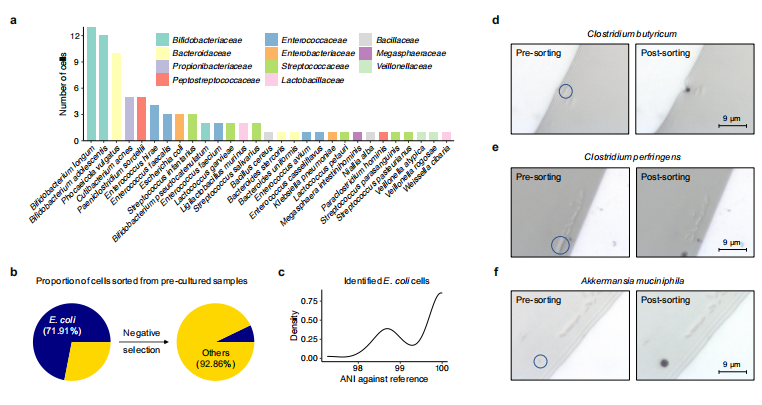
Figure 4: Targeted Recovery of Live Bacteria from Complex Microbiomes:
Precision single-cell culturomics enabled selective recovery of target bacteria from complex gut microbiota. Machine learning-guided negative selection reduced the dominance of E. coli, while LIFT-based sorting enabled targeted recovery of beneficial or rare bacteria, including Clostridium butyricum and Akkermansia muciniphila.
3.4 Targeted isolates enable downstream genomic discovery
Beyond target recovery, the study further showed that precision culturomics can support downstream biological discovery. By isolating beneficial Bifidobacterium species before and after short-term antibiotic exposure, the researchers performed genome-level analysis of strain variation, resistance-related changes, and adaptive evolution in gut commensals.
This result demonstrates that single-cell-derived cultures recovered by precision culturomics can be used not only for microbial isolation, but also for deeper functional, genomic, and evolutionary studies.
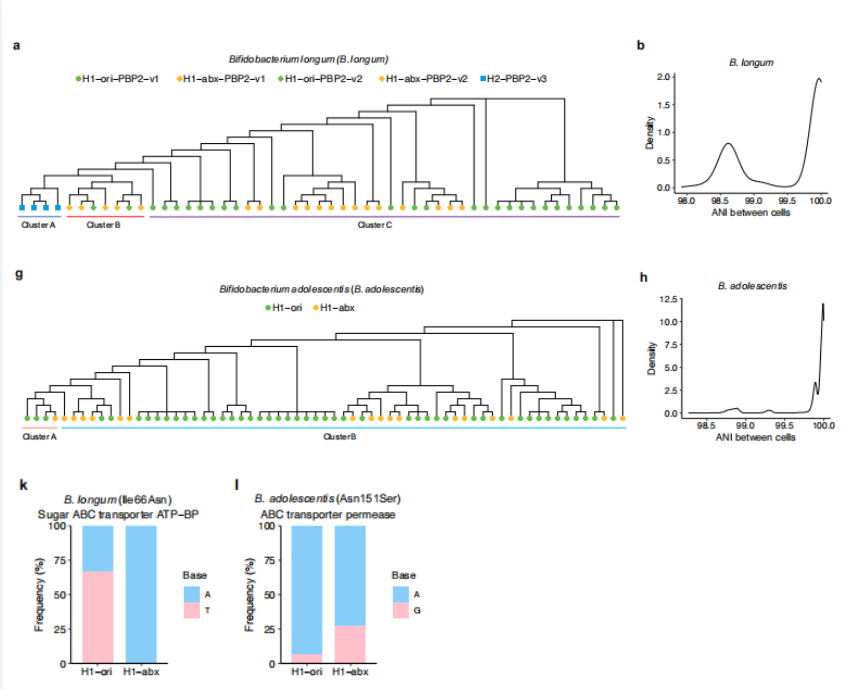
Figure 5: Single-Cell-Derived Isolates Enable Genomic Discovery:
Targeted single-cell-derived cultures allowed researchers to analyze beneficial Bifidobacterium species before and after short-term antibiotic exposure. Genomic analysis revealed strain-level variation and adaptive allele-frequency shifts, showing how precision culturomics can support downstream functional and evolutionary studies.
04. Conclusion | Research Impact
This study establishes a new technical route for precision single-cell culturomics. By combining label-free morphology, Raman spectroscopy, machine learning, and LIFT-based sorting, the workflow enables researchers to identify and culture target bacteria directly from complex microbiome samples at single-cell resolution.
The approach has strong potential in microbiome research, live biotherapeutic product development, probiotic discovery, fecal microbiota transplant safety monitoring, and studies of microbial adaptation under antibiotic pressure.
05. Value of Hooke Instruments | Technology Value of PRECI SCS-R300
In this study, PRECI SCS-R300 served as the key platform connecting single-cell visualization, Raman phenotyping, LIFT-based sorting, and live microbial culture.
The value of PRECI SCS-R300 can be summarized in three points:
First, it enables precise single-cell isolation from complex microbiome samples, allowing target bacteria to be recovered before colony formation.
Second, its integrated Raman capability supports label-free biochemical characterization, helping researchers understand what they are selecting before culture.
Third, the combination of morphology, Raman spectra, and LIFT sorting creates a flexible “observe–identify–sort–culture” workflow, supporting both enrichment of desired microbes and exclusion of unwanted taxa.
For microbiome and live biotherapeutic research, PRECI SCS-R300 helps researchers move beyond traditional colony picking toward precision, target-oriented microbial recovery.
06. Research Team
This study was led by Dr. Huijue Jia and collaborators from Fudan University, the Greater Bay Area Institute of Precision Medicine, Guangzhou Medical University, the University of Chinese Academy of Sciences, and Zhejiang University.
Dr. Jia's research focuses on metagenomics and culturomics, with the goal of developing systematic and actionable approaches to understand the human microbiome in health and disease.
Building on her long-standing expertise in human microbiome research, the team has been advancing microbial single-cell technologies that connect microbial identity, phenotype, culture, and genomic analysis. In this study, they further extended LIFT-based single-cell technology from microbial single-cell omics to precision culturomics, demonstrating a powerful workflow for recovering target live bacteria from complex microbiome samples and enabling downstream functional and evolutionary studies.
Customer Outcomes
-

 Nature Communications| Precision culturomics based on label-free single-cell morphology and Raman spectroscopy2026.08.03